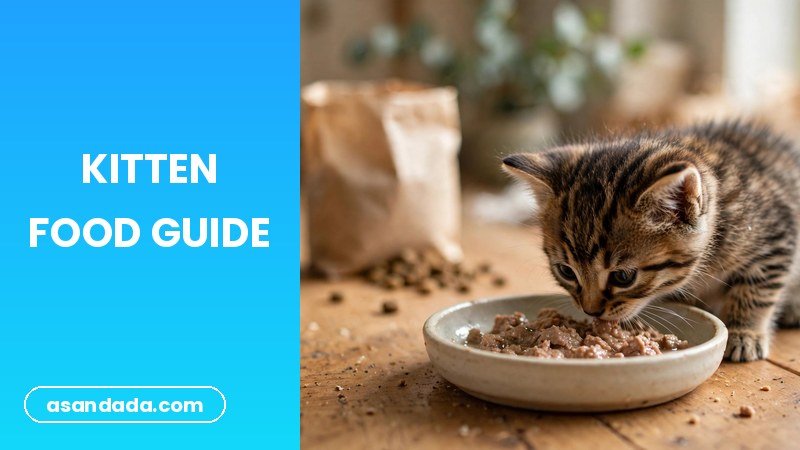
Figuring out what to feed a kitten feels more complicated than it should. The pet store aisle is a wall of bags and cans, every label claims to be the best, and well-meaning people will tell you everything from “just give table scraps” to “only the most expensive brand will do.” The reality is simpler: kittens need calorie-dense, kitten-formulated commercial food, served on a schedule that matches their age — and that’s about 90% of the job.
This guide gives you the full picture: a feeding schedule chart by age, an honest wet vs. dry comparison, portion guidance, how to switch foods safely, and the foods you should never feed a kitten. For everything beyond the bowl — safe room setup, litter training, vet visits — see our complete guide on how to take care of a kitten for beginners.
The Non-Negotiable Rule: Kitten-Formulated Food
Before the charts and comparisons, one rule overrides everything else: feed food labeled for kittens or “for all life stages.” Adult cat food isn’t formulated for growth — it has less protein, less fat, and different mineral balances than a developing kitten needs. That “kitten” label means the food meets established nutritional standards for growth, which takes the guesswork out of balancing calcium, phosphorus, DHA, and the rest yourself.
This applies whether you choose wet, dry, or a mix. The format is a preference; the formulation is a requirement.
What to Feed a Kitten at Every Age: The Feeding Chart
Kittens grow fast — roughly tripling in weight between 8 and 16 weeks — and their feeding needs shift as they go. Use this as your starting schedule, then adjust based on your kitten’s body condition and your vet’s advice.
| Age | Meals per day | What to serve | Notes |
|---|---|---|---|
| 0–4 weeks | Bottle every 2–3 hrs | Kitten milk replacer only | Orphaned neonates need specialized care — work with your vet or a rescue |
| 4–5 weeks | 4–5 small meals | Gruel: wet kitten food mixed with milk replacer | The weaning transition; messy but fun to watch |
| 6–8 weeks | 4 meals | Wet kitten food + small amounts of dry | Fully weaned around 8 weeks; introduce dry gradually |
| 2–4 months | 3–4 meals | Wet + dry kitten food mix | Peak growth phase — appetite will seem enormous |
| 4–6 months | 3 meals | Wet + dry kitten food mix | Growth steadies slightly; keep meals scheduled |
| 6–12 months | 2–3 meals | Wet + dry; begin thinking about adult transition | Many kittens self-regulate to 2–3 meals by now |
| 12 months | 2 meals | Transition to adult cat food | Switch gradually over 7–10 days around the first birthday |
A few things the chart doesn’t show: kittens in the peak growth phase (roughly 2–6 months) eat a startling amount relative to their size — often twice the calories per pound of an adult cat. Don’t panic at the grocery bill; it’s temporary and it’s normal. Also, these are starting points. A lean, ravenous kitten and a dainty grazer of the same age genuinely need different amounts, which is why scheduled meals beat free-feeding early on — you can see what’s normal for your kitten and spot appetite changes fast.
Wet vs Dry Food: An Honest Comparison
Most vets and experienced owners land on a mix of both, but here’s how they compare so you can decide the balance that works for your household.
| Factor | Wet food | Dry food |
|---|---|---|
| Hydration | Excellent — ~75–80% moisture, supports urinary health | Low — ~10% moisture; kitten must drink enough water |
| Palatability | Most kittens strongly prefer it | Varies; some kittens are indifferent |
| Calorie density | Lower per bite — good for portion control | Higher — easy to overfeed if free-fed |
| Convenience | Must be refrigerated after opening; serve fresh | Easy to store, measure, and leave for grazers |
| Cost | More expensive per calorie | More budget-friendly |
| Dental claims | Minimal dental benefit | Slight mechanical benefit, but not a substitute for dental care |
The practical takeaway: use wet food as the foundation (especially for hydration — cats as a species tend to under-drink), and use dry food for convenience between wet meals or in puzzle feeders. There’s no prize for picking a side. A kitten eating a good-quality mix of both, in kitten formulation, is eating better than the vast majority of cats in history.
One persistent myth to clear up: dry food does not meaningfully “clean teeth.” The kibble shatters on contact and provides only slight abrasion. Dental health comes from genetics, regular vet checkups, and — if your cat tolerates it — tooth brushing, not from kibble.
How Much to Feed: Portion Guidance That Actually Helps
Bag labels give feeding guidelines by weight, and they’re a reasonable starting point — but they’re written for the average kitten, and yours may not be average. Here’s how to dial it in:
- Start with the label, then watch the kitten. Feed the label’s recommended amount for your kitten’s weight, split across the day’s meals. After two weeks, assess: can you feel (but not prominently see) the ribs? Is there a visible waist when viewed from above? That’s the target zone.
- Adjust in small steps. If your kitten is getting roly-poly, trim portions by about 10% and reassess in two weeks. If ribs are too prominent, increase similarly. Kittens should be lean but not skinny — they’re athletes in training, not bodybuilders.
- Weigh monthly. A kitchen scale and a monthly weigh-in tell you more than any chart. Steady gain along a growth curve is the goal; sudden plateaus or drops deserve a vet call. Tracking weight is also one of the first-month habits recommended in our beginner’s guide to kitten care.
- Treats count. Training treats and snacks should stay under about 10% of daily calories. It’s easy to double-feed when everyone in the house is sneaking the kitten treats.
Scheduled meals are your secret weapon here. When you serve three or four measured meals a day, you know exactly how much went in — and a kitten that suddenly leaves food uneaten is telling you something. Free-feeding a bottomless bowl hides that signal completely. If your schedule makes midday meals hard, a timed automatic feeder for the dry portion works well.
How to Transition Foods Without Stomach Upset
At some point you’ll switch foods — the shelter’s brand to your preferred brand, kitten to adult food at twelve months, or just trying something your kitten likes better. Kittens have sensitive digestive systems, and abrupt switches commonly cause vomiting or diarrhea. The fix is boring and effective: go slow.
The 7–10 day transition:
- Days 1–3: 75% old food, 25% new food
- Days 4–6: 50% old, 50% new
- Days 7–9: 25% old, 75% new
- Day 10+: 100% new food
If you see soft stool at any stage, pause the transition — hold at the current ratio for a few extra days before moving forward. There’s no deadline; the schedule serves the kitten, not the other way around. This same gradual approach applies when introducing a new protein or switching between wet and dry ratios.
When you first bring your kitten home, by the way, don’t change their food at all for the first week or two. New home plus new food is a recipe for digestive drama. Ask the breeder, shelter, or previous owner what they were feeding, buy a small supply of exactly that, and make any changes later, gradually — our first-time owner’s guide walks through the full settling-in routine for those early weeks.
Foods You Should Never Feed a Kitten
Kittens are curious and fast, and they’ll investigate anything that hits the floor. Keep these firmly out of reach:
- Cow’s milk. The classic cartoon image is a myth — most kittens are lactose intolerant after weaning, and cow’s milk commonly causes diarrhea. Fresh water is the drink; kitten-formulated food is the nutrition.
- Chocolate, coffee, and caffeine. Toxic to cats, full stop.
- Onions, garlic, chives, and leeks. Damages red blood cells in cats, even in small amounts or cooked into foods.
- Grapes and raisins. Toxic to cats; the exact mechanism isn’t fully understood, which is all the more reason to keep them away.
- Anything with xylitol (birch sugar). Common in sugar-free gum, candy, and some peanut butters. Extremely dangerous.
- Raw meat, raw eggs, and raw fish. Risk of bacterial contamination and parasites; raw fish also contains an enzyme that destroys thiamine, an essential B vitamin for cats.
- Bones. Cooked bones splinter; even raw bones are a choking and obstruction risk for a small kitten.
- Dog food. It lacks nutrients cats require (like adequate taurine and arachidonic acid) and isn’t a substitute, even temporarily beyond an emergency meal or two.
The default is always complete commercial kitten food. Homemade diets can work for some cats, but balancing feline nutrition at home is genuinely difficult — if you’re considering it, consult your vet or a veterinary nutritionist first rather than following internet recipes.
Frequently Asked Questions
Can kittens eat adult cat food in a pinch?
For a meal or two in an emergency, it won’t cause harm. As a regular diet, no — adult food doesn’t have the calorie density or nutrient balance a growing kitten needs. Get kitten-formulated food as soon as you can.
When should I switch from kitten food to adult food?
Around twelve months for most cats. Larger breeds that mature slowly may benefit from staying on kitten food a bit longer — ask your vet at the one-year checkup. Transition gradually over seven to ten days.
Is grain-free food better for kittens?
Not necessarily. Cats need animal protein first and foremost, but grains aren’t harmful to most cats, and grain-free formulas aren’t automatically higher quality. Focus on a reputable manufacturer, kitten formulation, and named meat ingredients — not marketing buzzwords.
My kitten begs for human food — is a little okay?
A tiny piece of plain cooked chicken or turkey as an occasional treat is fine for most kittens. But make it the exception, not the habit: human food displaces balanced nutrition, and some “harmless” foods (like onion-seasoned meat) are dangerous. Keep treats under 10% of daily calories.
Should I warm up wet food?
Serving wet food at room temperature is ideal — food straight from the fridge can be unappealing. A few seconds in the microwave (stirred well, tested for hot spots) or just letting it sit out for 15–20 minutes works. Never serve it hot, and don’t leave wet food out for more than a couple of hours; discard uneaten portions.
Final Thoughts
What to feed a kitten comes down to three habits: choose kitten-formulated commercial food, serve it on an age-appropriate schedule, and transition anything new gradually. Wet food for hydration, dry food for convenience, portions tuned to your kitten’s body condition — that’s the whole strategy, and it works.
Don’t overthink the brand wars. A kitten eating a reputable kitten food on a consistent schedule, with fresh water always available and a vet checking in along the way, is set up for healthy growth. Save your energy for the fun parts — like explaining to guests why the kitten gets room service four times a day.
This content is for informational purposes only and isn’t veterinary advice. If your cat shows signs of illness, consult your veterinarian.