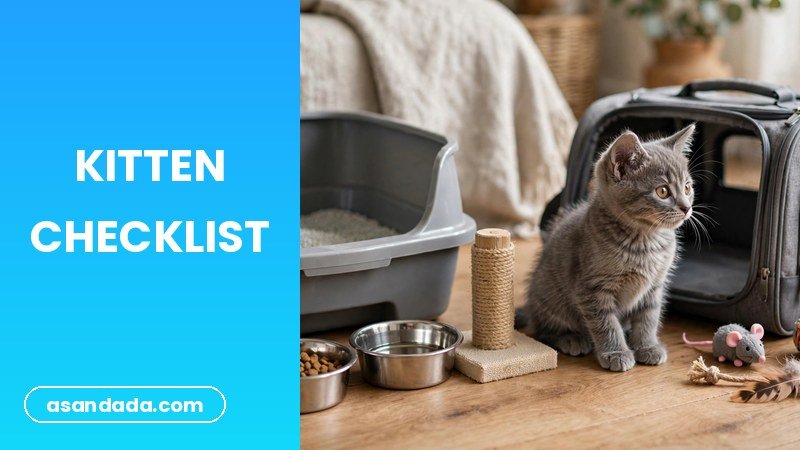
The fastest way to feel unprepared as a new cat owner is to bring your kitten home and realize you forgot the litter scoop. This new kitten checklist for first time owners fixes that: the 15 essentials to buy before adoption day, what actually matters when choosing each one, and the first-week milestones that tell you everything’s working.
Buy the essentials before your kitten arrives, not after. A calm first day — with everything already in place — makes the transition easier for both of you. For the bigger picture of settling in, pair this list with our complete guide on how to take care of a kitten for beginners.
The New Kitten Checklist: 15 Essentials
1. A low-sided litter box
Your kitten’s legs are about two inches long. A tall storage tote with high walls is a climbing wall, not a toilet. Start with a simple open box with low sides that a tiny kitten can step into easily. Skip the covered, self-cleaning models for now — you can upgrade later once litter habits are solid. Plan on one box per cat plus one extra as your household grows.
2. Unscented, fine-grained litter
Kittens have sensitive noses, and heavily perfumed litter is one of the top reasons kittens avoid the box. Choose an unscented, fine-grained clumping litter to start — the soft texture feels natural under little paws. Fill to about two to three inches deep. If your kitten came from a shelter or breeder, ask what litter they were using and start with the same kind to avoid a jarring switch.
3. A sturdy litter scoop
You’ll scoop daily — that’s the single habit that keeps litter box problems away. A metal or sturdy plastic scoop with slots sized for clumping litter makes the job take thirty seconds. Keep a small trash bin with a lid nearby so used litter doesn’t sit around smelling up the room.
4. Kitten-formulated wet food
Wet food is the backbone of a good kitten diet: it’s hydrating, protein-rich, and most kittens love the texture. Buy food labeled specifically for kittens (or “all life stages”), which means it meets nutritional standards for growth. Start with whatever the kitten was already eating and transition gradually. Our feeding guide on what to feed a kitten breaks down portions by age so you’re not guessing.
5. Kitten-formulated dry food
Dry food is convenient, calorie-dense, and good for grazing between wet meals — many owners feed a mix of both. Again, it must be kitten-formulated, not adult cat food. Buy a small bag at first; an opened bag goes stale within about a month, and there’s no point stockpiling until you know which food your kitten actually likes.
6. Food and water bowls (two sets is ideal)
Stainless steel or ceramic bowls are best — plastic can trap odors and cause chin acne in some cats. Get shallow, wide bowls: deep narrow bowls push a kitten’s whiskers against the sides, which many cats dislike. Place water away from food (cats instinctively prefer it) and wash both bowls daily. Two sets means one can be in the dishwasher while the other is in use.
7. A secure cat carrier
You’ll need this on day one — for the ride home — and for every vet visit after. Choose a hard-sided carrier with a top-opening or removable lid; vets strongly prefer them because lifting a scared kitten out through the top is far less stressful than dragging them through a small front door. Line it with a soft towel, and leave it out at home with treats inside between trips so it doesn’t become the scary box that only means vet visits.
8. A scratching post or pad
Kittens need to scratch — it’s how they stretch, mark territory, and maintain their claws. If you don’t provide an approved target, your sofa becomes the target. A vertical post (at least tall enough for a full stretch as they grow) wrapped in sisal plus a cheap corrugated cardboard scratcher covers both vertical and horizontal scratchers. Put the scratcher near where your kitten sleeps; cats love a good scratch right after waking up.
9. A cozy bed or blanket
Your kitten needs a warm, soft place to sleep in their safe room. A washable bed with raised sides feels den-like and secure. That said, keep expectations realistic: many kittens will sleep in the cardboard box the bed came in. Buy one inexpensive bed, not three luxury ones, until you learn your kitten’s preferences.
10. An interactive wand toy
This is the single most important toy you’ll own. A wand with a feather or fabric lure lets you play the way kittens are wired to play — stalking and pouncing on “prey” at a safe distance from your hands. Two or three 10–15 minute sessions a day will do more for your kitten’s behavior than any other purchase on this list. Remember: hands are not toys, so the wand keeps play appropriately directed.
11. Small solo toys
For the hours you’re not actively playing, scatter a few small toys: crinkle balls, soft mice, and lightweight balls they can bat around. Rotate them every few days — a toy that disappears for a week becomes brand new again. Inspect regularly for loose parts, and skip anything with small glued-on eyes or bells that a determined kitten could chew off and swallow.
12. A soft brush
Start grooming in kittenhood and it becomes a non-event for life. A soft-bristle brush or grooming mitt suits most shorthaired kittens; longer-haired kittens will eventually need a steel comb too. Keep first sessions to a minute or two, paired with treats. Our beginner walkthrough for grooming a cat at home covers brushing technique, nail trims, and ear checks step by step.
13. Kitten nail clippers
Those needle-sharp kitten claws need trimming every couple of weeks. Small scissor-style or guillotine clippers sized for cats give you control; human nail clippers can crush the nail. Learn where the quick (the pink blood supply inside the nail) is before your first trim — in pale kitten nails it’s easy to see — and trim only the sharp tip. If you’re nervous, ask your vet to demonstrate at the first visit.
14. A breakaway collar and ID tag
Even strictly indoor kittens should wear identification — doors get left open and kittens are lightning-fast. The collar must be a breakaway (safety) style that pops open if it snags on anything; regular collars are a strangulation risk. Attach a lightweight tag with your phone number. Fit it snugly enough that two fingers slide underneath but the kitten can’t hook a paw through it.
15. An enzyme-based cleaner
Accidents happen, especially in week one. Regular soap doesn’t fully remove the proteins in urine, and any lingering scent tells the kitten “bathroom goes here.” An enzyme-based pet cleaner actually breaks those proteins down. Blot the mess, saturate the spot, let it sit per the label directions, and blot again. Keep it within arm’s reach for the first month — you’ll be glad you did.
Nice-to-Haves (Buy Later, If You Want)
The 15 items above are the true essentials. Once those are covered, these upgrades are worth considering down the road:
- A water fountain. Many cats drink more from running water, and better hydration supports urinary health. Not essential on day one, but a nice addition.
- A tall cat tree. Kittens love vertical space, and a sturdy tree gives them climbing, scratching, and napping in one piece of furniture. Wait until you’ve seen how your kitten plays before investing.
- A second litter box. The one-box-per-cat-plus-one rule matters more once your kitten has the run of the house. For the safe-room phase, one is fine.
- Treat puzzles. Once your kitten is settled and confident, food puzzles add mental stimulation to mealtimes.
Resist the urge to buy everything before you know your kitten. The owners who spend the most on day one usually end up with a closet of ignored toys and a kitten who only wants the cardboard box.
First-Week Milestones: How You’ll Know It’s Working
Unpack the supplies, and then watch for these signs that your kitten is settling in well:
- Eating regularly by day two. A kitten might skip a meal on arrival day from stress, but consistent eating should kick in quickly. Kittens under six months generally do best with three to four small meals a day.
- Using the litter box within the first 24 hours. Most kittens figure it out fast. After meals, naps, and play, gently place them in the box to build the habit.
- Drinking water. Check the bowl level daily — subtle, but it matters. Wet food contributes a lot of moisture too.
- Playing in short bursts. Even a shy kitten should show interest in a wand toy by day three or four. Play is a great barometer of how comfortable they feel.
- Sleeping deeply. A kitten that sleeps sprawled out in the open, rather than only wedged behind furniture, is a kitten that feels safe.
- Seeking you out. Coming to you voluntarily — for play, pets, or just proximity — is the milestone that matters most. Let it happen on their timeline.
Call your vet promptly if your kitten doesn’t eat for more than 24 hours, has persistent diarrhea or vomiting, seems lethargic when awake, or hides constantly without emerging. Kittens are small and can dehydrate quickly, so early calls beat late ones every time.
New Kitten Checklist for First Time Owners: Saving Money Without Cutting Corners
You don’t need the premium version of everything. The litter box can be a basic plastic pan. The bed can be a folded towel in a cardboard box — many kittens prefer it anyway. The scratcher can be the corrugated cardboard kind that costs very little and that cats genuinely love.
Where not to economize: food quality (kitten-formulated from a reputable maker), the carrier (it has to survive years of vet trips), and the breakaway collar (safety isn’t the place to save). Buy small quantities of food and litter until you know your kitten’s preferences — a giant bag of rejected kibble is the most expensive kind.
One more money tip: check local shelters and rescue groups before buying. Many run low-cost supply starter packs, and some include a free first vet exam with adoption. It never hurts to ask.
Frequently Asked Questions
How much does it cost to prepare for a kitten?
For the 15 essentials on this checklist, most first-time owners spend somewhere in the low hundreds of dollars (or the local equivalent), with food and the carrier being the biggest single items. Ongoing monthly costs — food, litter, and routine vet care — are the real budget to plan for, not the one-time setup.
Should I buy everything before or after adopting?
Before. Adoption day is stressful enough without a pet-store run. Having the safe room fully set up means your kitten walks into a calm, ready environment instead of waiting in a carrier while you assemble a litter box.
What’s the one thing new owners forget most often?
The enzyme cleaner, the litter scoop, and — surprisingly — the carrier. People remember the cute stuff (toys, bed) and forget the unglamorous tools that make daily life work. Run through this checklist twice before you shop.
Can I use dog supplies for my kitten?
Some cross over fine (stainless steel bowls, enzyme cleaner), but several don’t. Dog food lacks nutrients cats require, dog flea treatments can be toxic to cats, and dog toys are often sized dangerously for kittens. When in doubt, buy the cat version.
Final Thoughts
This new kitten checklist for first time owners isn’t about buying the most stuff — it’s about having the right stuff ready so your kitten’s first days feel safe and predictable. Litter box, good food, clean water, a carrier, a scratcher, and a few toys cover the vast majority of what a kitten actually needs from you in week one. The rest — the bond, the routines, the personality quirks — builds itself over the weeks that follow.
Shop once, set up the safe room, and then put the list away and enjoy your kitten. You’ve done the preparation; now comes the fun part.
This content is for informational purposes only and isn’t veterinary advice. If your cat shows signs of illness, consult your veterinarian.