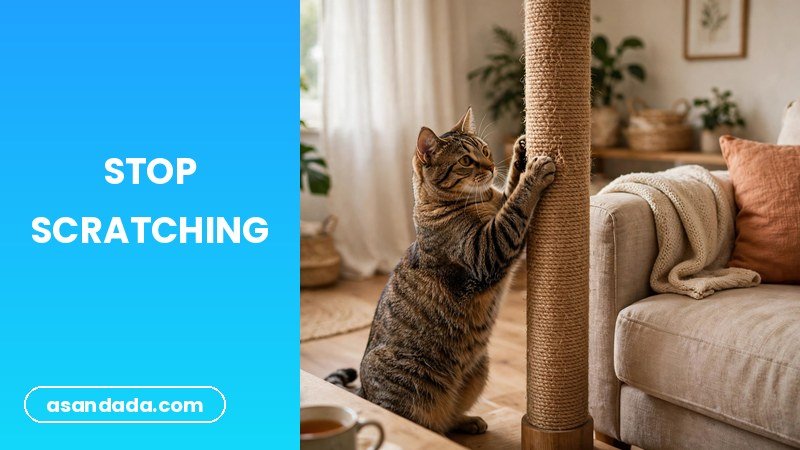
If you’re wondering how to stop a cat from scratching furniture, here’s the mindset shift that changes everything: you can’t stop a cat from scratching, period. Scratching is as natural to a cat as stretching is to you — it sheds old claw sheaths, stretches the shoulders and back, and marks territory with scent glands in the paws. Your real goal is redirecting that scratching to something you don’t mind being shredded.
I learned this the expensive way. My first cat, a lanky tabby named Milo, treated the arm of our secondhand couch like his personal manicure station. Yelling didn’t work. A spray bottle didn’t work (it just taught him to scratch when I wasn’t looking). What worked was a $25 scratching post placed in exactly the right spot, plus a roll of double-sided tape on the couch arm for two weeks. The couch survived. Milo was happy. Nobody’s feelings were hurt.
These seven methods work because they work with cat instincts instead of against them. Start with methods 1 and 2 — they solve most cases on their own.
Method 1: Give Them a Scratcher They Actually Want to Use
This is the single most effective fix, and it’s also where most owners go wrong. A wobbly, carpet-covered mini-post from the discount aisle won’t cut it.
What makes a good scratching post:
- Tall enough for a full stretch. At least 30 inches (75 cm) for a vertical post — your cat should be able to reach up and stretch their whole body. Most cheap posts are too short, which is why cats ignore them.
- Sturdy. If it wobbles, your cat won’t trust it. A post that tips over once may be ignored forever.
- The right texture. Sisal rope is the gold standard — most cats prefer it over carpet (carpet teaches them that carpet-like textures, like your rug, are fine to scratch). Corrugated cardboard scratchers are a cheap second choice and many cats love them.
- Both orientations. Some cats are vertical scratchers, some are horizontal. Watch which your cat prefers on the furniture and match it. When in doubt, get one of each.
Placement matters more than the post itself. Put the scratcher right next to the furniture your cat is currently scratching. Cats often scratch right after waking up, so placing a post near their favorite sleeping spot works well too. Once your cat is using the new post consistently (usually 2–3 weeks), you can slowly move it a few feet at a time to wherever you’d prefer it to live.
One post is the minimum. The honest recommendation is one per room your cat spends time in, or at least one per floor.
Method 2: Make the Furniture Unappealing (Temporarily)
While your cat learns to love the scratcher, make the couch less satisfying to scratch. The key word is temporarily — you’re not wrapping your sofa in plastic forever.
- Double-sided sticky tape. Products made for this (wide, pet-safe sticky sheets) go on the scratched areas. Cats hate the tacky feeling on their paws. Most cats give up within a week or two. Remove it once the scratcher habit is solid.
- Furniture covers or throws. A thick throw blanket over the favorite scratching spot changes the texture and breaks the habit. Choose something without a loose weave your cat’s claws can hook into.
- Aluminum foil. Works for some cats, but it’s ugly and noisy — use it as a short-term bridge, not a lifestyle.
Whatever you use, pair it with the scratcher from Method 1. Deterrents alone just move the scratching to the next piece of furniture. Redirection is the whole game.
Method 3: Redirect in the Moment — Calmly
When you catch your cat scratching the furniture, don’t yell, don’t clap loudly, and absolutely don’t punish. A startled cat doesn’t learn “scratching is wrong” — they learn “scratching is dangerous when the human is watching,” and they’ll simply do it at 3 AM instead.
Instead, calmly pick them up (or lure them with a toy) and place them at the scratching post. Gently drag their paws down the sisal once or twice — not forcing, just demonstrating. The moment they scratch the post, reward them: a treat, praise, a chin scratch, whatever they like. You’re building the association “post = good things happen.”
Sprinkling a little catnip on a new scratcher helps too, though about a third of cats don’t respond to catnip. Silvervine is a good alternative for the unimpressed.
Method 4: Trim Those Nails Regularly
You can’t stop scratching with nail trims alone, but shorter, blunter claws do dramatically less damage to upholstery. Indoor cats typically need a trim every 2 to 4 weeks. Trim only the sharp tip, staying well clear of the quick (the pink area inside the nail), and keep styptic powder on hand in case of a nick.
If you’re new to this, my full walkthrough on how to groom a cat at home covers the step-by-step technique, including how to handle dark nails where you can’t see the quick. Many owners find that combining regular trims with a good scratcher reduces furniture damage to nearly zero.
Soft nail caps are another option worth knowing about. These are small vinyl caps glued over each claw (your vet can apply the first set and show you how). They fall off naturally as the nail grows and need replacing every 4 to 6 weeks. They’re humane, painless, and popular with owners of leather furniture. Not every cat tolerates them, but many do.
Method 5: Use Deterrent Sprays (With Realistic Expectations)
Pet-store deterrent sprays (usually citrus or herbal scented) get mixed reviews, and honestly, most cats ignore them after a day. They can help as a supporting player — a light spray on the furniture arm plus sticky tape plus a nearby scratcher — but don’t rely on a spray alone.
One caution from the safety file: never use essential oils as a DIY deterrent. Essential oils are toxic to cats, and “natural” doesn’t mean safe. Stick to products specifically made for cats, and if your cat starts sneezing or avoiding the room, stop using the spray.
Method 6: Tire Them Out With Play
A bored cat with full energy is a destructive cat. Many owners notice the scratching spikes in the evening — that’s the witching hour, when an under-stimulated indoor cat invents their own entertainment, usually at your furniture’s expense.
Two 10-to-15-minute interactive play sessions a day (morning and evening) make a real difference. Use a wand toy that mimics prey — birds, bugs, mice — and let your cat actually “catch” it at the end. A tired cat scratches the post out of habit and then naps, instead of redecorating your armchair. For a full playbook, see how to play with your cat the right way.
This method shines for young cats under two years old, who have the most energy and the least impulse control. Kittens aren’t being spiteful — they’re just bored athletes.
Method 7: Check Whether Stress Is Driving It
Sometimes excessive scratching — especially if it started suddenly — is a stress signal, not a furniture preference. Common triggers: a new pet in the house, a move, new furniture (ironically), a new baby, or a change in your schedule.
If the scratching ramped up alongside a household change, address the stress first. Keep routines predictable, make sure the cat has safe hiding spots and vertical space, and introduce changes gradually. If you recently added a second cat, the step-by-step guide to introducing two cats is essential reading — rushed introductions are one of the most common stress triggers I see.
And if the scratching is truly out of character, or paired with other behavior changes (hiding, appetite changes, over-grooming), a vet check is worthwhile. Possible medical reasons include skin irritation or anxiety, and only your vet can sort that out.
Why Punishment Backfires (And What to Do Instead)
Let’s be direct about the methods that don’t work, because they’re still everywhere:
- Yelling, clapping, or startling teaches the cat to fear you, not to respect the couch.
- Spray bottles create a cat who scratches when you’re not home. The behavior doesn’t change; the timing does.
- Physical punishment of any kind damages your bond and can make a cat fearful or aggressive. It has no place in cat care.
Every behaviorist-backed approach to scratching is built on the same formula: make the right choice easy and rewarding (great scratcher, well placed, praised) and the wrong choice boring or mildly unpleasant (tape, covers). That’s it. No drama required.
A Note on Declawing: Please Don’t
This matters enough to say plainly: do not declaw your cat. Declawing isn’t a nail trim — it’s the surgical amputation of the last bone of each toe, comparable to removing a human fingertip at the last knuckle. It can cause chronic pain, changes in how a cat walks, litter box avoidance, and increased biting (a declawed cat’s only remaining defense).
Declawing is banned or restricted in many countries and in a growing number of US states and cities, and most veterinary associations oppose it as an elective procedure. Everything in this article — scratchers, nail trims, nail caps, redirection — solves the furniture problem without surgery. If your vet ever suggests declawing for a behavioral reason, get a second opinion from a feline-focused vet.
Quick-Start Plan: Your First Two Weeks
If your couch is under attack right now, here’s the order of operations:
- Today: Buy or order a tall, sturdy sisal scratching post (and a cardboard horizontal scratcher if your cat scratches rugs). Put sticky tape on the damaged furniture areas.
- Days 1–3: Place the post directly beside the scratched spot. Rub catnip on it. Redirect calmly every time you catch scratching in progress.
- Days 4–7: Trim nails (just the tips). Start twice-daily play sessions.
- Week 2: Reward every use of the post. Once your cat chooses the post over the furniture for several days running, remove the tape.
- Ongoing: Keep the post in good condition — replace it when the sisal is shredded flat. A worn-out post sends cats back to the couch.
Most owners see real improvement within two weeks. Stubborn cases — usually involving a poorly placed post or a stressed cat — take a month. That’s normal.
FAQs: Cat Scratching Furniture
Why does my cat scratch the furniture even though she has a scratching post?
Usually one of three reasons: the post is too short, too wobbly, or in the wrong spot. Watch how your cat scratches the furniture — tall stretch or low crouch? — and match the post to it. Then move the post to within arm’s reach of the furniture she’s targeting.
Will my cat ever stop scratching completely?
No — and that’s fine. Scratching is healthy, necessary behavior. The goal is 100% of scratching on approved surfaces, not zero scratching. A cat happily shredding a sisal post is a success story.
Is it okay to trim only my cat’s front claws?
You can, and many owners do — the front claws do most of the furniture damage. But trimming all four paws takes only a few extra minutes and keeps things even. Never trim whiskers, and never cut into the quick.
My cat scratches me, not just the furniture. Help?
That’s a different behavior with different causes — usually play aggression or overstimulation. I break it all down in why does my cat bite me when I pet it, which covers the body-language cues that tell you a bite or scratch is coming.
Are nail caps safe for cats?
When applied correctly, yes — they’re soft vinyl, painless, and fall off naturally. Have your vet apply the first set so you can see the technique. They’re not ideal for every cat (some chew them off obsessively), but they’re a humane option worth trying before you despair over a leather sofa.
Final Thoughts
Stopping a cat from scratching furniture isn’t a battle — it’s a redecorating project. Give your cat something better to scratch, make the couch temporarily boring, trim the claws, and play with them until they’re pleasantly tired. Milo’s couch arm never fully recovered, but the replacement sofa has been scratch-free for three years, and Milo has a sisal post he’s genuinely proud of. Your cat doesn’t want to ruin your furniture. They just need an approved outlet, and it’s your job to provide one. For the bigger picture of settling a cat into your home, start with how to take care of a kitten for beginners.
This content is for informational purposes only and isn’t veterinary advice. If your cat shows signs of illness, consult your veterinarian.