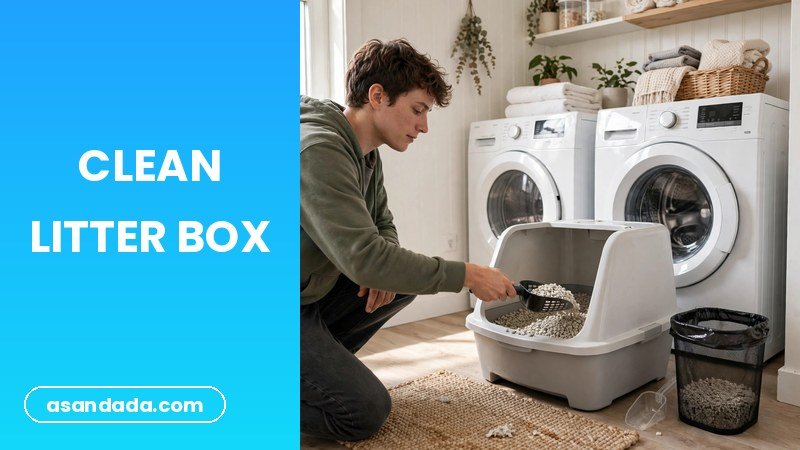
Ask ten cat owners how often they clean the litter box and you’ll get ten different answers — from “every single day, obviously” to a sheepish “uh, when it smells.” Here’s the thing: this is one of those chores where the right frequency genuinely matters. It’s not just about odor (though your nose will thank you). A dirty litter box is the number one reason cats start going outside the box, and it’s a hygiene issue for the whole household.
So how often should you clean a cat litter box? The short answer: scoop at least once a day, do a full litter change on a schedule that depends on your litter type, and wash the box itself about once a month. Below is the complete schedule — scooping, changing, and washing — plus the multi-cat rule and the mistakes that make boxes smell worse.
The Quick-Answer Schedule
If you want the whole routine on one glance, here it is:
| Task | How often |
|---|---|
| Scoop solids and clumps | Once a day minimum (twice is better) |
| Top up litter level | As needed, after scooping |
| Full litter change (dump everything, refill fresh) | Depends on litter type — see table below (roughly weekly to monthly) |
| Wash the empty box with mild soap and water | Every 1–2 full changes (about monthly) |
| Replace the box itself | Every 1–2 years, or when scratched/stained beyond cleaning |
That’s the framework. Now let’s get into the details, because “it depends on your litter type” is doing real work in that table.
How Often to Scoop: Every Day, No Exceptions
Scooping means removing solid waste and urine clumps with a slotted scoop, once a day at minimum. Many owners find twice a day — morning and evening — keeps things noticeably fresher, and it takes about two minutes once it’s a habit.
Why daily scooping matters so much:
- Cats are fastidious. A cat faced with yesterday’s waste in the box will often hold it (uncomfortable and unhealthy) or find somewhere else to go — usually your rug, your laundry pile, or behind the couch. Most “my cat pees outside the box” problems that aren’t medical trace back to box cleanliness. If you’re still in the training phase, our guide on how to litter train a kitten explains how box habits get built — and how a dirty box can quietly undo them.
- Odor compounds fast. Urine breaks down into ammonia, and the smell gets exponentially worse the longer waste sits. Daily scooping is the single biggest odor-control measure — bigger than any scented litter or air freshener.
- It’s a health check. Scooping daily means you notice changes early: diarrhea, straining, blood in urine, or a sudden change in frequency. These can be early signs of urinary or digestive issues worth mentioning to your vet.
Scooping technique: Use a sturdy metal or heavy-duty plastic scoop with slots sized for your litter. Sift through the full depth, shake clean litter back through, and dump the waste into a bag or a dedicated litter bin. Then top up fresh litter so the depth stays at 2–3 inches — too shallow and urine hits the bottom and sticks; too deep and you’re wasting litter.
Where to put the waste: Bag it and bin it. Don’t flush cat waste — most litters (even “flushable” ones) can clog plumbing, and cat feces can carry Toxoplasma gondii, a parasite that wastewater treatment doesn’t reliably remove and that harms marine wildlife. Trash it, tied off.
How Often to Change the Litter Completely
Even with faithful daily scooping, litter gradually becomes saturated with odor and bacteria. A full change means dumping all the old litter, washing the box (see below), and refilling with fresh litter. How often depends on what you’re using:
| Litter type | Full change frequency |
|---|---|
| Non-clumping clay | Once a week (it absorbs urine without clumping, so it saturates fastest) |
| Clumping clay | Every 2–4 weeks (scooping removes most urine, so it lasts longer) |
| Silica crystal | Every 3–4 weeks per most manufacturers (stir daily, scoop solids; replace when crystals yellow or stop absorbing) |
| Pine pellets / wood | About once a week (scoop solids daily; pellets break down into sawdust — sift or replace when mostly sawdust) |
| Paper-based | Once a week (low odor control, saturates quickly) |
| Corn / wheat / walnut (natural clumping) | Every 2–3 weeks |
These are starting points, not laws. Hot weather, a cat that drinks a lot, or a small box will push you toward the shorter end. The real test: if the box smells even right after scooping, or the litter looks discolored and dusty throughout, it’s change time regardless of the calendar.
A note on scented vs. unscented: Scented litters mask odor for human noses but many cats dislike strong fragrances — and a cat that dislikes the smell may avoid the box. Unscented litter plus diligent scooping controls odor better in practice, because you’re removing the source instead of perfuming it.
How Often to Wash the Litter Box (and What to Wash It With)
Wash the empty box every 1–2 full litter changes — roughly once a month. Urine residue builds up on the plastic over time, and no amount of fresh litter fixes a box that itself smells like a urinal.
How to wash it properly:
- Dump all old litter into the trash.
- Scrub with warm water and a mild, unscented dish soap. A dedicated brush or sponge (not the one you use for dishes) works fine.
- Rinse thoroughly — soap residue can irritate paws and put cats off the box.
- Dry completely before refilling. Damp litter clumps prematurely and grows odor faster.
What NOT to use: bleach, ammonia-based cleaners, pine-scented disinfectants, or any harsh chemical cleaner. Here’s why this matters: ammonia smells like urine to a cat, so cleaning a box with an ammonia-based product can actually encourage the cat to re-mark it. Bleach and strong disinfectants leave residues and fumes that irritate cats’ sensitive noses and paws. Mild soap and water is genuinely all you need — if the box still smells after a good soap scrub, it’s time to replace the box, not escalate the chemicals.
Replace the box every year or two, or sooner if the plastic is deeply scratched. Scratches trap odor and bacteria that scrubbing can’t reach. When you do replace it, keep the old box around for a day or two during the transition — some cats are suspicious of a brand-new box, and having the familiar one nearby eases the switch.
The Multi-Cat Rule: One Box Per Cat, Plus One
If you have more than one cat, the standard recommendation is n + 1 litter boxes: one per cat, plus one extra. Two cats? Three boxes. Three cats? Four.
This isn’t pet-industry upselling — it’s behavioral science. Cats are territorial about elimination spots, and in multi-cat homes, one cat may guard or ambush near a single box, leaving the other cat with no safe option. Extra boxes in different locations (not lined up side by side in the same corner, which cats treat as one big box) give every cat an unguarded option.
Multi-cat homes also need more frequent scooping — with two cats sharing boxes, twice-daily scooping becomes the realistic minimum, and full changes land on the shorter end of the ranges above. If you’re adding a second cat to the household, read our guide on how to introduce two cats — it covers box placement during introductions, when territorial tension is highest.
New to multi-cat life entirely? Our complete first-time owner guide covers the broader setup — feeding stations, vertical space, and all the other resources that need duplicating when cat number two arrives.
7 Signs You’re Not Cleaning the Box Enough
Your cat will tell you — you just have to read the signals:
- Going outside the box. The classic sign. Before assuming a behavior problem, rule out cleanliness (and then see a vet — urinary issues are also a common cause).
- Perching on the edge to avoid touching the litter. A cat balancing on the rim is a cat staging a protest.
- Rushing in and out without the usual digging and covering routine.
- Strong ammonia smell hitting you when you walk into the room — if you can smell it, it’s overdue.
- Litter that’s dark, dusty, or uniformly discolored even after scooping.
- Scratch marks and caked residue on the bottom and sides of the box.
- One cat blocking another from the box — a cleanliness-adjacent problem that the n+1 rule usually fixes.
Keeping Litter Box Smell Under Control (Beyond Cleaning)
Cleaning frequency does 80% of the work, but these extras help with the rest:
- Location matters. Put boxes in quiet, low-traffic, well-ventilated spots — not next to the furnace, not in a damp basement corner, and never right next to food and water. Avoid laundry rooms with strong detergent smells.
- Use a mat. A textured litter mat outside the box catches tracked litter and keeps it off your floors. Shake it out every few days.
- Covered vs. open boxes: Covered boxes trap odor inside — which means they smell worse to the cat, not better. Many cats prefer open boxes, and open boxes remind you to scoop because you can see the state of things. If odor is your concern, scoop more often rather than adding a lid.
- Baking soda: A thin sprinkle under the fresh litter is a safe, unscented odor absorber many owners swear by. Skip scented deodorizing powders — the fragrance bothers cats more than it helps you.
- Ventilation: A cracked window or a small fan near (not blowing into) the box area helps enormously. Never use plug-in air fresheners or scented sprays around the litter box — and note that many essential oils are toxic to cats, so “natural” scented products aren’t automatically safe.
Frequently Asked Questions
Can I go a week without scooping if I use premium litter?
No — the litter type doesn’t change the scooping rule. Premium clumping or crystal litters extend the time between full changes, but waste sitting in the box still produces ammonia, still smells, and still bothers the cat. Daily scooping is about removing waste; litter quality is about what happens between full changes. There is no litter that scoops itself.
How many litter boxes do I need for one cat?
Two is the ideal (the n+1 rule with n=1), placed in different spots. That said, one well-maintained box works fine for most single cats in smaller homes — the key word is well-maintained: scooped daily, changed on schedule. If your single cat starts avoiding a clean box, adding a second box in a different location is the first thing to try.
Is it safe to clean the litter box while pregnant?
Cat feces can carry Toxoplasma gondii, which is dangerous during pregnancy. The standard medical guidance: have someone else handle litter box duties if possible; if you must do it yourself, wear disposable gloves, wash hands thoroughly afterward, and scoop daily (the parasite needs 1–5 days in feces to become infectious, so daily scooping materially reduces risk). This is a “discuss with your doctor” topic, not an internet-advice topic — bring it up at your next prenatal visit.
My cat kicks litter everywhere. Will a bigger box help?
Often, yes. Many commercial boxes are small for an average adult cat — look for a box at least 1.5 times the cat’s body length. High-sided boxes (or a large storage tote with a doorway cut in) contain enthusiastic diggers. A mat outside catches the rest. What doesn’t help: yelling at the cat for digging. Digging and covering are deeply wired instincts — manage the mess, not the cat.
Does the type of scoop matter?
More than you’d think. A flimsy scoop that flexes and dumps clumps back into the box will make you dread the chore. A sturdy metal scoop with appropriately sized slots (smaller slots for fine-grain litter, larger for pellets) makes daily scooping genuinely quick. It’s a small purchase that pays off every single day.
Final Thoughts
Litter box maintenance isn’t glamorous, but it’s one of the highest-leverage routines in cat ownership: two minutes of scooping a day prevents odor, prevents most box-avoidance problems, and gives you an early-warning system for health changes. Scoop daily, change fully on your litter type’s schedule, wash monthly with mild soap, and follow the n+1 rule for multi-cat homes.
Do that consistently, and the litter box becomes what it should be — a non-issue you barely think about, in a house that doesn’t smell like you own cats.
This content is for informational purposes only and isn’t veterinary advice. If your cat shows signs of illness, consult your veterinarian.