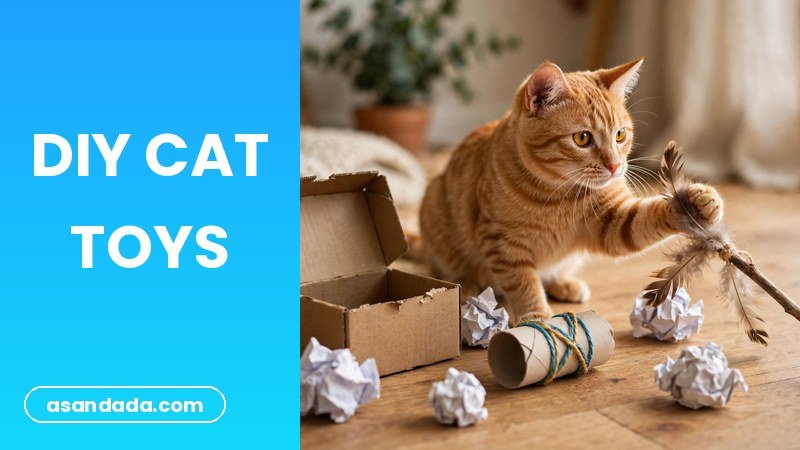
You don’t need to buy toys to keep a cat happy — some of the best ones come from the recycling bin. These 12 DIY cat toys from household items each take a few minutes to make, need no special tools, and cost nothing. Every toy below includes the materials, the steps, and a safety note, because homemade doesn’t have to mean risky.
A quick safety note before we start: supervise play with any homemade toy, especially ones with string, small parts, or plastic. Cats chew things apart, and small pieces can become choking hazards. Check each toy before play sessions and throw it away when it starts falling apart — replacements are free, after all. If your cat ever swallows string, ribbon, or a small object and starts drooling, gagging, or refusing food, call your vet promptly rather than waiting it out.
These toys work best as part of a real play routine. Our guide on how to play with your cat properly shows you how to use toss and wand toys in a proper stalk-chase-catch session, and our budget enrichment list has 21 more free ideas to rotate through.
1. Crumpled Paper Balls
Materials: Plain paper — printer paper, junk mail, or brown packing paper.
Steps:
1. Crumple a sheet into a tight ball, about the size of a golf ball.
2. Make five or six at once and toss one down a hallway.
3. When one gets soggy or flattened, toss it and crumple a fresh one.
Why cats love it: The crinkle sound and unpredictable bounce trigger chase instincts. This is the toy most cats choose over expensive store-bought balls — many owners find their cat ignores a $8 toy to play with a paper ball instead.
Safety note: Use plain paper only — no staples, paper clips, or glossy coated paper that could have sharp edges. Supervise in case your cat starts eating the paper rather than batting it.
2. Toilet Roll Treat Dispenser
Materials: Empty toilet paper roll, a few dry treats or kibbles.
Steps:
1. Fold one end of the roll flat and crease it closed.
2. Drop in 4–5 treats.
3. Fold the other end closed the same way.
4. Roll it across the floor to show your cat treats fall out of the seams.
Why cats love it: It combines batting, chasing, and a food reward — three kinds of fun in one free toy.
Safety note: Replace when the cardboard gets soggy or chewed through. Don’t use this with wet food — soggy cardboard falls apart and your cat may eat the pieces.
3. Cardboard Box Hunting Blind
Materials: A medium cardboard box, scissors or a box cutter.
Steps:
1. Close the box flaps and tape the bottom shut.
2. Cut two or three holes in the sides, each about 3–4 inches wide — big enough for a paw, too small for a head to get stuck.
3. Drop a crumpled paper ball or small toy inside.
4. Set it on the floor and let your cat discover it.
Why cats love it: Cats hunt by ambush, and a box with paw-holes is a perfect blind. They’ll reach in, bat toys around inside, and sometimes climb in themselves.
Safety note: Cut holes generously — a hole a cat can squeeze its head through is a hole it can get stuck in. Tape down any sharp cardboard edges, and recycle the box when it gets crushed.
4. Sock Catnip Mouse
Materials: One clean odd sock, a pinch of dried catnip, a small handful of plain stuffing (cotton balls or scrap fabric work).
Steps:
1. Put the stuffing and catnip inside the sock.
2. Tie a tight knot at the open end — or tie it shut with a strip of fabric.
3. Trim any loose threads hanging off the knot.
4. Toss it for your cat.
Why cats love it: It’s the right size to grab, bunny-kick, and carry around. The catnip makes it interesting even for cats that usually ignore soft toys.
Safety note: Check the knot regularly — if stuffing starts leaking out, re-tie or retire the toy. Loose stuffing and threads can be swallowed. About a third of cats don’t respond to catnip at all; if yours is one of them, try silvervine instead.
5. Feather Wand From a Stick
Materials: A wooden dowel, chopstick, or sturdy stick (about 2 feet long); a 2–3 foot length of sturdy cord or shoelace; a few feathers, a strip of fleece, or crumpled tissue tied into a tuft.
Steps:
1. Tie the cord securely to one end of the stick.
2. Tie the feather tuft or fabric strip firmly to the other end of the cord.
3. Test the knots with a firm tug before giving it to your cat.
4. Drag it along the ground in prey-like movements — never dangle it over your cat’s head constantly.
Why cats love it: This is the single best interactive toy type for mimicking real hunting. The long stick keeps your hands safely away from claws and teeth.
Safety note: Put this toy away in a closet after every session. Never leave a wand toy out unsupervised — the cord is a string-swallowing risk, and cats have injured themselves getting tangled. Re-tie the lure when the knots loosen.
6. Paper Bag Rustle Sack
Materials: A large paper grocery bag.
Steps:
1. Cut off the handles completely — this is mandatory, not optional.
2. Open the bag and lay it on its side on the floor.
3. Toss a paper ball inside so your cat hears it rustle.
Why cats love it: The crinkle sound, the hiding spot, the ambush potential — paper bags hit every cat button at once.
Safety note: Always remove the handles first — bag handles are a strangulation hazard. Use paper bags, not plastic ones, which can suffocate. Replace the bag when it tears.
7. Bottle Cap Hockey Pucks
Materials: A few clean plastic bottle caps.
Steps:
1. Rinse and dry the caps.
2. Slide one across a hard floor — tile, wood, or laminate works best.
3. Watch your cat chase it like a hockey player.
Why cats love it: They’re light, they slide far with a flick, and they make a satisfying skittering sound on hard floors.
Safety note: Use caps that are too large to swallow — standard soda and water bottle caps are fine for most adult cats, but skip this toy for young kittens that might try to chew caps apart. Pick up any cap with chewed or cracked edges.
8. Egg Carton Puzzle Feeder
Materials: An empty cardboard egg carton, a handful of dry kibble.
Steps:
1. Drop a few kibbles into each cup.
2. Close the lid.
3. Set it on the floor and let your cat figure out how to pry it open.
Why cats love it: It turns a 30-second meal into a 10-minute foraging project. Great for fast eaters and bored indoor cats alike.
Safety note: Use cardboard cartons, not styrofoam — cats that chew styrofoam can swallow chunks of it. Toss the carton after a few uses when it gets soggy or torn.
9. Fleece Strip Tug Toy
Materials: An old fleece blanket, sweatshirt, or t-shirt; scissors.
Steps:
1. Cut a strip about 1 inch wide and 12 inches long.
2. Tie a knot in the middle for texture.
3. Drag it along the floor for your cat to chase and pounce on.
Why cats love it: Fleece is soft, light, and moves in a slithery way that reads as “alive” to a cat. The knot gives them something to grab with their teeth.
Safety note: Supervise and put it away after play. Fleece strips that unravel into long threads are a swallowing risk — check the strip before each session and cut a fresh one when it starts fraying. Never leave fabric toys out unsupervised.
10. Ping Pong Ball in the Bathtub
Materials: A ping pong ball (or crumpled paper ball), an empty bathtub.
Steps:
1. Make sure the tub is completely dry.
2. Drop the ball in.
3. Let your cat go — the curved walls keep the ball bouncing back into play.
Why cats love it: The ball never escapes, so the chase never ends. The echo of the ball in the tub adds to the excitement. This one entertains some cats for 20 minutes straight.
Safety note: Only use a dry tub — a wet, slippery tub is a fall risk. Don’t leave your cat shut in the bathroom with the toy; let them come and go freely.
11. Cardboard Scratcher Pad
Materials: Corrugated cardboard boxes, a box cutter, non-toxic glue or packing tape.
Steps:
1. Cut the cardboard into strips about 2 inches wide.
2. Roll or stack the strips tightly into a pad shape — a rolled spiral or a stacked rectangle both work.
3. Tape or glue the shape so it holds together.
4. Sprinkle a little catnip on top and set it where your cat already scratches.
Why cats love it: Corrugated cardboard has the perfect texture for scratching — most cats prefer it to sisal. A homemade pad costs nothing versus $10–15 at the store.
Safety note: Use plain, unprinted cardboard where possible — heavy inks and glossy coatings aren’t great for cats that chew. Replace the pad when it’s shredded flat. If your cat is scratching furniture instead of the pad, placement matters more than the pad itself — put it right next to the furniture they’re targeting.
12. Ice Cube Tray Foraging Game
Materials: An ice cube tray, a few treats or kibbles.
Steps:
1. Drop one treat into several of the compartments.
2. Set the tray on the floor.
3. Let your cat fish the treats out with its paws.
Why cats love it: It’s a gentle beginner puzzle — easy enough that cats don’t get frustrated, tricky enough to be interesting. Perfect for older cats or first-time puzzle users.
Safety note: Wash the tray first if it’s been in the freezer with food. Use a sturdy tray — thin plastic ones crack under enthusiastic pawing, and cracked plastic edges should go straight in the bin.
Storing and Rotating Your DIY Cat Toys From Household Items
Homemade toys have one big advantage over store-bought: when they wear out, you just make another. But they also wear out faster, so build a simple habit:
- Keep a “toy box” — a shoebox or bag where finished toys live. It keeps them in one place and makes rotation easy.
- Rotate weekly. Put half the toys away and bring out the other half. Old toys feel new again after a week in the box.
- Inspect before play. A 10-second check for loose threads, cracked plastic, soggy cardboard, or leaking stuffing prevents most problems.
- Retire without guilt. A toy that’s falling apart has done its job. Toss it and spend two minutes making a replacement.
Pair these toys with a proper play routine and you’ll cover most of your cat’s daily needs. Our indoor cat enrichment guide shows how to build these toys into a weekly rotation, and if you’re raising a young cat, the beginner’s kitten care guide covers how play fits into the bigger picture of the first months.
Frequently Asked Questions
Are homemade cat toys safe?
They can be, with supervision and common sense. The main risks are the same as with store-bought toys: string that can be swallowed, small parts that can choke, and materials that break into sharp pieces. Check each toy before play, supervise, and throw away anything that’s falling apart. When in doubt, simpler is safer — a crumpled paper ball has almost nothing that can go wrong.
What household items are dangerous for cats to play with?
Rubber bands, hair ties, tinsel, and loose string or yarn top the list — cats swallow them and they can cause serious internal problems. Small objects like coins, buttons, and beads are choking hazards. Avoid anything with small detachable parts, sharp edges, or toxic materials. And never use plastic bags as toys.
How often should I replace DIY cat toys?
Whenever they start falling apart — for paper and cardboard toys, that’s usually every few days of active use; fabric and sturdier items last a few weeks. Since replacements are free and take minutes, replace early rather than late.
My cat only likes the box the toy came in. Is that normal?
Completely normal, and honestly the box is a fine toy. Lean into it — boxes, bags (handles removed), and packing paper are legitimately some of the best cat entertainment that exists. Many owners find their cat’s favorite “toy” was free all along.
Can kittens play with these DIY toys?
Yes, with extra supervision. Kittens chew more and swallow things more readily than adults, so skip small hard items like bottle caps for kittens under about 4 months, keep all string toys strictly supervised, and check fabric toys for loose threads more often.
Final Thoughts
Twelve toys, zero dollars, and nothing you had to order or assemble with an Allen wrench. Start with the crumpled paper balls and the toilet roll dispenser tonight — they take two minutes combined and work for almost every cat. Then try one new toy a week until you know your cat’s favorites. Homemade toys won’t replace your time and attention, but paired with regular interactive play, they keep an indoor cat busy, fit, and happy on any budget.
This content is for informational purposes only and isn’t veterinary advice. If your cat shows signs of illness, consult your veterinarian.