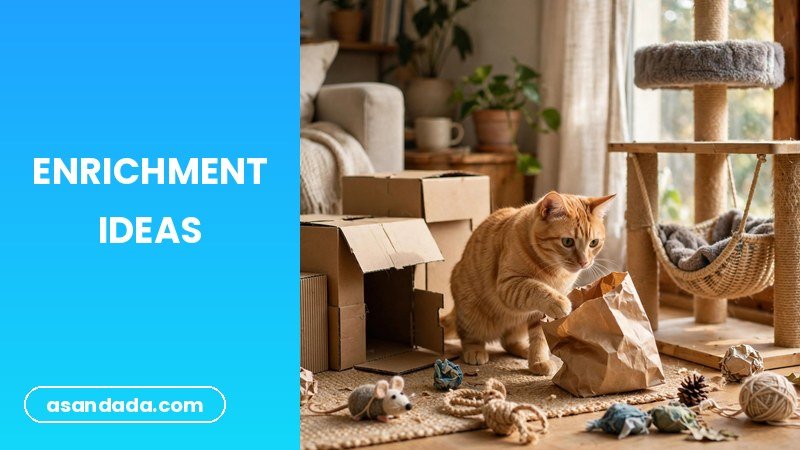
Indoor cat enrichment sounds like something that requires expensive gadgets, but it really just means giving your cat things to do with its brain and body. A bored indoor cat invents its own entertainment — and you usually won’t like its choices. The good news: most of the best enrichment ideas cost nothing or close to it. Here are 21 indoor cat enrichment ideas on a budget, all DIY-friendly, grouped into four categories so you can mix and match through the week.
If you’re new to all this, start with our guide on how to play with your cat the right way — interactive play is the foundation everything else builds on. And many of these ideas pair perfectly with toys you make yourself from our DIY cat toys guide.
Sensory Enrichment: New Things to Smell, Hear, and Touch
Cats experience the world through their nose and ears more than their eyes. Rotating new smells and textures through their space is one of the cheapest forms of enrichment there is.
1. The sniff walk
Take a paper bag or cardboard box and rub the inside with a pinch of dried catnip, silvervine powder, or a fresh herb like mint or basil from your kitchen. Let your cat investigate. The sniffing and face-rubbing is mental exercise in itself.
2. Herb garden pots
Plant a small pot of cat grass (wheatgrass seeds are cheap and sprout in about a week) or catnip. Put it where your cat can nibble safely. Replace it when it’s chewed flat — seeds cost almost nothing, so keep a second pot sprouting while the first one is in use.
3. Texture path
Lay out a short trail of different textures on the floor: a bath mat, a piece of fleece, a crinkly paper bag flattened out, a cardboard scratcher. Cats investigate new textures with their paws and whiskers, and it takes about two minutes to set up. Swap one item every few days to keep it interesting.
4. Scent swap boxes
Save a few small cardboard boxes and put a different safe scent in each one — a worn sock, a pine cone from outside (cleaned), a cloth dabbed with a drop of olive oil. Let your cat sniff through them like a little detective. Avoid essential oils entirely — they’re toxic to cats, even diffused ones, so keep this strictly to plain household and food smells.
5. Bird sounds playlist
Play 10–15 minutes of bird or nature sounds from your phone or speaker while your cat sits by the window. Many cats lock onto the sounds, ears rotating, completely absorbed. It’s a calm, low-effort enrichment you can run while you make coffee.
Foraging Enrichment: Make Dinner a Hunt
A cat’s brain is built for working for food. When meals arrive in a bowl with zero effort, one of the biggest daily enrichment opportunities goes to waste. Foraging enrichment fixes that.
6. Muffin tin puzzle
Drop a few kibbles into the cups of a muffin tin, then cover each cup with a tennis ball or crumpled paper ball. Your cat has to bat the covers off to eat. Five minutes to set up, and most cats get the idea within a day or two.
7. Toilet roll treat tubes
Fold one end of an empty toilet paper roll closed, drop in a few treats, fold the other end. Your cat bats it around until treats fall out of the seams. Make three or four at once and stash them — they cost nothing and take seconds each.
8. Scattered feeding
Instead of one bowl, split your cat’s dry food into small piles hidden around one room — on a shelf, behind a chair leg, inside an open box. Your cat “hunts” its meal across the room. Start easy (visible piles) and make the hiding spots trickier over a week or two.
9. Egg carton feeder
Put kibble in the cups of an empty egg carton and close the lid loosely. Your cat learns to pry it open. Cardboard egg cartons work best since they’re easy to paw apart.
10. Water bottle spinner
Take a clean, dry plastic bottle, cut a few kibble-sized holes in the sides with scissors, and put a handful of dry food inside. Your cat rolls it around and food drops out. Use a small bottle (water or soda size) and supervise — replace it if your cat starts chewing the plastic edges.
Climbing and Exploring: Vertical Space Changes Everything
Cats feel safer and more stimulated when they can go up. You don’t need a $200 cat tree — height can come from rearranging what you already own.
11. Box staircase
Stack sturdy cardboard boxes in stair-step formation against a wall or couch, taping them together so they can’t slide. Instant climbing structure. Most cats prefer this to expensive furniture anyway — many owners find their cat ignores the fancy tree and sleeps in the box staircase instead.
12. Shelf highway
Clear a path along existing shelves, bookcases, or the tops of wardrobes so your cat can travel the room without touching the floor. Add a folded towel on one or two perches for comfort. Check that shelves are stable and nothing breakable sits in the path.
13. Paper bag tunnels
Open a few paper grocery bags and connect them end to end with tape, or just scatter several open bags around a room. Cats love the crinkle, the hiding spots, and the ambush opportunities. Cut off or remove the handles first — bag handles are a strangulation hazard, and this is the one safety step you should never skip.
14. Blanket fort
Drape a blanket over two chairs or a coffee table to make a cave. Toss a toy inside. Some cats claim the fort as a napping spot, others use it as a hunting blind for ambush play. Either way, it gets used.
15. Rearranged obstacle course
Once a week, move two or three pieces of lightweight furniture or boxes into a new layout in one room. Cats are deeply curious about changes to their territory, and a “new” room layout triggers a full investigation patrol — sniffing every corner, rubbing on everything, re-mapping the space.
Window Watching: The Cheapest TV You’ll Ever Buy
A window with something to look at is enrichment that runs all day for free. If your cat ignores your windows, it’s usually because there’s nothing interesting outside them.
16. Window perch setup
Clear a windowsill or put a sturdy chair, stool, or box in front of a window so your cat can sit comfortably at glass level. A folded blanket makes it inviting. Cats will spend hours here once they discover it — it’s the single highest-value free enrichment most owners can offer.
17. Bird feeder outside the window
Hang a simple suction-cup or pole-mounted bird feeder outside the window your cat watches most. Within a week you’ll usually have regular bird visitors, and your cat will have front-row seats. This is often called “cat TV,” and the name is earned.
18. Squirrel and bird videos
When there’s nothing live outside, put on a 20–30 minute “videos for cats” compilation on a TV or tablet — birds, squirrels, fish. Prop the device where your cat can watch comfortably. Many cats try to catch the animals on screen, which tells you it’s working.
19. Open-window smells (screened only)
On a nice day, open a window that has a secure, intact screen so your cat can smell the outside air — grass, rain, distant cooking smells. Fresh outdoor scents are fascinating to an indoor cat. Never open an unscreened window, even on an upper floor; cats fall from windows far more often than people expect.
20. Rotating window views
If you have windows on two sides of your home, encourage your cat to use both — put a perch at each. Morning sun on one side, afternoon activity on the other. Two views double the programming.
21. Dangle toy at the window
Tie a feather or crinkle toy to a string and hang it from the top of the window frame (tied securely, out of reach when you’re not there). Your cat bats at it while watching the world outside. Supervise string play and take the toy down when the session ends — loose string is one of the most common things cats swallow, and swallowed string can be dangerous enough to need veterinary care.
Indoor Cat Enrichment Ideas on a Budget DIY: Cost and Time Table
Here’s what each idea costs and how long it takes to set up, so you can pick what fits your week:
| # | Idea | Cost | Setup time |
|---|---|---|---|
| 1 | Sniff walk | ~$0 | 2 min |
| 2 | Herb garden pots | $2–5 (seeds) | 10 min + growing time |
| 3 | Texture path | $0 | 2 min |
| 4 | Scent swap boxes | $0 | 5 min |
| 5 | Bird sounds playlist | $0 | 1 min |
| 6 | Muffin tin puzzle | $0 | 5 min |
| 7 | Toilet roll treat tubes | $0 | 2 min each |
| 8 | Scattered feeding | $0 | 3 min |
| 9 | Egg carton feeder | $0 | 2 min |
| 10 | Water bottle spinner | $0 | 5 min |
| 11 | Box staircase | $0 | 15 min |
| 12 | Shelf highway | $0 | 20 min |
| 13 | Paper bag tunnels | $0 | 5 min |
| 14 | Blanket fort | $0 | 3 min |
| 15 | Rearranged obstacle course | $0 | 10 min weekly |
| 16 | Window perch setup | $0 | 5 min |
| 17 | Bird feeder outside window | $5–15 | 15 min |
| 18 | Squirrel and bird videos | $0 | 2 min |
| 19 | Open-window smells | $0 | 1 min |
| 20 | Rotating window views | $0 | 5 min |
| 21 | Window dangle toy | $0–3 | 5 min |
Total cost for all 21: roughly the price of one bag of treats. The seeds and bird feeder are the only things that cost anything at all.
Safety Notes Worth Repeating
Most DIY enrichment is perfectly safe, but three rules cover nearly every risk:
- Remove bag handles before giving your cat any paper or plastic bag. Handles around the neck are the classic preventable accident.
- Supervise string, yarn, and ribbon play. Never leave these out when you’re not watching — cats swallow string, and it can tangle internally.
- Check homemade items regularly. Cardboard gets soggy, plastic gets chewed, small parts work loose. Toss anything that’s falling apart and make a fresh one — they’re free, after all.
Also keep toxic things out of the enrichment zone: lilies, chocolate, onions, and grapes are all toxic to cats, so if your foraging games involve the kitchen, make sure no scraps of these are in reach. And as mentioned above, skip essential oils entirely.
Building a Weekly Enrichment Routine
You don’t need to do all 21 at once — that would be chaos. A simple rotation works better:
- Daily: one interactive play session (morning), scattered feeding or a puzzle feeder for one meal, window perch access all day.
- Every few days: rotate the texture path or scent boxes, put out a fresh toilet-roll tube or two.
- Weekly: rearrange the obstacle course, swap which toys are “out” versus put away, start a new pot of cat grass.
Toys that live out 24/7 become invisible to cats. Keeping half the toys in a closet and rotating them weekly makes old toys feel new again — it’s the cheapest enrichment trick there is. New kittens especially benefit from routine plus novelty; our complete beginner’s guide to kitten care explains how enrichment fits into a kitten’s first months.
Frequently Asked Questions
How much enrichment does an indoor cat need each day?
Aim for at least two focused activities daily — typically one interactive play session and one foraging or puzzle activity — plus passive enrichment like window access throughout the day. That’s enough for most adult cats. Kittens and young adults often want more.
My cat ignores puzzle feeders. What am I doing wrong?
Start easier. Most owners make the first puzzle too hard and the cat gives up. Use an open muffin tin with no covers first, then add one cover, then cover all the cups. Build difficulty over a week. Also try it when your cat is a little hungry, not right after a full meal.
Is it safe to let my cat chew cat grass?
Yes — plain wheatgrass, oat grass, or barley grass grown for cats is safe and most cats enjoy it. Just make sure it’s actually cat grass and not a treated houseplant, and keep it away from any plants you’re unsure about. If your cat vomits repeatedly after eating grass, cut back and mention it to your vet.
How often should I rotate my cat’s toys?
Weekly is a good rhythm. Put half the toys away in a closet and swap them out every Sunday (or whatever day you pick). Rotated toys feel novel again, and it costs nothing.
Can enrichment really stop behavior problems?
It helps with the boredom-driven ones — night zoomies, ankle pouncing, excessive meowing for attention, and some destructive scratching. Many owners find a consistent play-plus-enrichment routine calms these down within a couple of weeks. It won’t fix everything, though — issues like litter box avoidance usually have other causes worth investigating separately.
Final Thoughts
Indoor cat enrichment doesn’t need a budget — it needs a little creativity and stuff you’d otherwise throw away. Pick three or four ideas from this list, try them this week, and watch which ones your cat loves. The sniff walk and the muffin tin puzzle are great starters because they take minutes and work for almost every cat. Build from there, rotate regularly, and your indoor cat will have a richer daily life than most outdoor cats.
This content is for informational purposes only and isn’t veterinary advice. If your cat shows signs of illness, consult your veterinarian.